It's funny the stuff you think about when it's too hot to sleep. Tonight, my musings took me in the direction of movies that use nudity in ways that are corrupt, foul, and painful (in a bad way). In my time, I've watched no end of films with nudity in them. Some of it was sexy. Some was shocking or disturbing in a thought-provoking way. Some was comic or meant merely to provoke low grade thrills. Then there's the bad naked: the naked where it's impossible to even feel purient interest, the naked that makes you wish that you and the rest of humanity were dead.
Having now finished my preface, I give you five movies containing the worst kinds of nudity:
5. Amityville 2: The Posession: The Amityville series never scored many points for class, but the true nadir of the franchise was an icky incest scene that takes place about a third of the way through. I can understand why the demon possessed boy wanted to get it on with his sister, but the way his sister casually tossed off her clothes upon request drained my soul. I don't think I'll ever get all of it back.
4. Showgirls: For the rape scene mainly. A well-done gang-bang scene is possible (Last Exit to Brooklyn had one, as I recall), but not when it's just another excuse to get an actress out of her clothes. Joe Bob Briggs said it best: "What movie is so sleazy that, after you see it, you have to go to a Times Square live-sex show to feel better about mankind?"
3. Caligula: Have you ever seen dogs eat recently severed testicles? That's just a preview of the fun you'll have with this movie. Gore Vidal took his name off this thing. He should have taken his name off anything that might have been adjacent to this thing as well.
2. Ringmaster: There are many, many bad sex scenes in this one, but the worst involves Jerry Springer. During this movie I believe I briefly lost the will to live.
1. The Lonely Lady: HBO was a wonderful thing when I was twelve years old. I waited until my parents were asleep, sneaked into the living room, turned on the TV with the sound down, and switched over to the rampant nudity that would arrive once the clock passed midnight. One night, I turned on the TV, checked the TV guide by its light, and discovered that, yes, a movie with nudity and strong sexual content was upon me. I thrilled. I panted. I watched with great intensity as the credits rolled. The Lonely Lady. I saw Pia Zadora. I didn't know this was, on its own, a harbinger of doom. I pressed on. Come on nudity! I saw Ray Liotta. I saw Ray Liotta wrestle Pia Zadora to the ground. I saw him rip her top off. Bingo! Here we go! I saw a...garden hose? What's he going to...? Oh my God! Where's the remote? YUCK! WHY? HOW? WHICH?
It scarred me for life. Sometimes I have flashbacks, and I weep.
Sweet dreams, kiddies.
Monday, July 17, 2006
Bad Naked


Saturday, July 15, 2006
The Tribute Vice Pays to Virtue
Wes Clark on Dailykos:
I am a proud member of the Democratic Party, and I believe it is our party's responsibility to support the will of the Democratic primary voters in Connecticut. I personally look forward to supporting the candidate CT voters elect as the Democratic nominee. Though, as an aside, I must say I find it ironic that Senator Lieberman is now planning a potential run as an independent after he continually questioned my loyalty to the Democratic Party during the 2004 presidential primary.
Gee, for a guy with Lieberman's principled reputation, he sure seems to have a habit of saying whatever he thinks he needs to say to get what he wants. Of course I'm sure he only does it because he has the best interests of the nation at heart, and those best interests just happen to involve his perpetual presence at the center of power. In this, he's not all that different from someone we all remember.
Thursday, July 13, 2006
Two Elements That Need to Vanish From Horror Movie Marketing
1. Whispering children
2. Kids singing familiar children's songs in minor keys.
Tuesday, July 11, 2006
I'm Telling You For the Last Time
It's time once again for a dissection. Next on the table, Jonathan Chait:
Part of what I'm arguing, though, is that the tactic of embracing the Lamont primary is more likely to make the problem worse than to make it better. Consider the scenarios. If Lamont wins the primary and the general election, which is akin to drawing an inside straight, then the direct effect is positive. But, as I argued in my previous Lieberman/Lamont column, if you defeat Lieberman, "he'll play the same role as before, only this time with the power of martyrdom behind him: the virtuous anti-Democrat, too good and honest for his party."
My response to that is this. If Joe Lieberman, private citizen, wants to spend his time in the wilderness pissing on the liberals who drove him from power, that's fine. It's a free country, and he can do whatever the hell he likes. Indeed, based on the way he behaved with Lamont in the debate, I'd expect some tantrums in the aftermath of electoral meltdown. Joe Lieberman is certainly the last person to ever blame himself for his problems. His attitude about the people whom he wants to vote for him reminds me of a certain heavyset, bald loudmouth:
Homer: [melancholy] My campaign is a disaster, Moe. [angry] I hate the public so much! [melancholy] If only they'd elect me. [angry] I'd make 'em pay! [melancholy] Aw, Moe, how do I make 'em like me?
I don't see why Chait sees Lieberman's future disgruntlement as such an enormous problem that we need to make Joe Lieberman senator for life. As a private citizen, Lieberman won't command nearly as much airtime, and he won't be able to do any damage during negotiations with Republicans. He can whine, but without portfolio, what can he actually do? Unless he's planning to climb to the top of the Capitol and pick off left leaning politicians with a deer rifle, I'm not scared.
On top of the tactical argument, I was drawing on the broader problems I see lying in the future. I don't think you can evaluate the Lieberman race in a vacuum. It's part of a broader fight within the Democrat Party and the liberal intelligentsia. Kevin Drum complains that my description of the liberal internet activists--"But in fact, they believe that any deviation from the party line--except for a few circumscribed instances, such as Democrats running for office in red states--is an unforgivable crime."--is too vague. "Deliberately vague," as Drum puts it.
Yes, I suppose the vagueness was deliberate--not, as he suggests, in order to conceal my own ignorance, but due to the aforementioned space constraints. Since I have space here, I'd offer up two prime examples of the party line. The first is Iraq. To be on the side of the angels, one must favor withdrawal and believe that there was no rational case to be made for war given the publicly-known information in 2002. The second is the netroots themselves. To be in the good graces of the activists, one must believe not only that the rise of Internet activism has some potentially positive ramifications, but to signal that one accepts a Manichean battle between virtuous people-powered activists and corrupt Washington insiders.
Well, to be strict about it, the belief that the netroots consists of virtous people-powered activists against corrupt Washington insiders is more a Dailykos belief than an actual party line, unless party lines don't require actual political parties in order to be enforced. That aside, I find Chait's description of the netroots's feelings about the war in Iraq insupportable.
Chait is right to say that you can't evaluate the Liberman race in a vacuum. What's significant to me about it is that alone among Senate Democrats who voted to authorize using force in Iraq, Joe Lieberman has drawn a substantial primary challenge. Why? Maria Cantwell voted the same way Lieberman did, and has also refused to reverse herself. She's also in a pretty blue state, yet somehow she's cruising through her primary. (Her leading opponent, and I use the word leading in its broadest possible sense, recently quit the race and endorsed her.) The only other Democratic Senator facing a significant primary challenge is Hawaii's Daniel Akaka, and his challenge comes from the right.
The left's problems with Lieberman go much deeper than Iraq. Lieberman's habit of adding a patina of bipartisanship to obviously partisan Republican enterprises--Impeachment, the War in Iraq, and of undermining Democrats--the debate with Cheney, the 2000 recount--has irritated Democrats in general in the left in particular for many years now. They read Lieberman as a man who doesn't act so much out of principle as out of a hunger for praise and recognition from pundits as a bipartisan statesman. He loves his enemies and hates his friends, and a good many of his friends have grown sick of it. Having spent years troubling his own house, he's about to inherit the wind.
So, Mr. Chait, if the current argument in the Democratic party worries you, I don't blame you. But place blame for the problem where it belongs, on Joe Lieberman: the arrogant, myopic, career pol who, more concerned with his own future than with the future of his party, spits on the voters who've always supported him in the past.
Monday, July 10, 2006
Lieberman Creates New Party
It's called Connecticut for Lieberman. What an imagination that man has. I've read the platform, which lists the three main members of CFL's constituency:
1. Joe Lieberman
2. Senator Joe Lieberman
and
3. Captain Cool (a.k.a. Joe Lieberman)
Friday, July 07, 2006
Lieberman or Bush Quiz
Go to Salon to take it. I got five out of eight. Despite some stylistic differences between the two, I actually found it harder to distinguish Bush from Lieberman than I did to tell Coulter from Hitler. No conclusion there. Just a fact.
Jeez, Joe, For Your Next Debate, Why Not Kick A Puppy?
Bob Schrum said that Lieberman's behavior in last night's debate with Ned Lamont made him wish that Lieberman had been half that aggressive in his debate with Dick Cheney in 2000. I expect he said that with a little extra bitterness, since Schrum ran that campaign and was no doubt backstage tearing his few remaining hairs out while Joe and Dick held their nationally televised singalong. The Lieberman/Lamont debate was less a discussion and more of a pistol whipping. Lamont gets much deserved points for simply emerging with an intact skull.
For Lieberman, though, it's a little more complicated, because it seemed to me that his vehemence was simply over the top. It reinforces an impression that's been hurting Lieberman all along--that he not only differs from other Democrats on policy issues, but that he also holds those Democrats with whom he differs in contempt. His manner indicated that he considered this primary challenge nothing more than a damned impertinence, and that showing up at all was somehow beneath his dignity. His attitude was to sniff and say to the audience "How dare you think that I shouldn't be your senator?"
Is it really wise to be that meanspirited and pugnacious toward a fellow Democrat during a primary debate? I guess we'll find out. But somehow I don't think the idea of Joe Lieberman's reserving all his venom for members of his own party will sit that well with primary voters. Instead, I wonder whether voters will think that Lieberman's disdain for Lamont extends to them as well. People like well informed, caustic, and funny debaters; but no one likes bullies, even when they win.
Tuesday, July 04, 2006
Strange Reasoning
Joe Lieberman, on CNN, said this when asked how he justified ignoring the wishes of Connecticut primary voters:
(From Crooks and Liars)
KING: But why have parties and why have primaries if the candidates
who may be backed by the establishment, but perhaps not win the votes of
the people who turn out on primary day can just take out insurance
policies and stay on the ballot even if they lose the primary? Why have
a party then?
LIEBERMAN: Right this is a very important question. And I would
answer it this way, John. This challenge to me is obviously a challenge
to my record of serving the state of Connecticut and the United States
of America, and it asks the voters of Connecticut to decide which one of
us, my challenger or I, could do a better job for them in the six years
ahead.
But it also raises questions about what do we mean by political
parties? And what kind of politics do we want to have? And when I say
that, here’s what I mean. The Democratic Party has always been at its
strongest when it welcomed a diversity of opinions.
My opponent is campaigning against me on one issue: Iraq. I have the
support of a host of progressive groups: the labor movement, the
environmental movement, the human rights political action fund, which is
the advocacy group for gay and lesbian Americans, Planned Parenthood. I
could go on and on.
I am a committed, loyal Democrat. And the question that is being asked
of the Democrats here in Connecticut is: will we impose a litmus test?
The same kind of litmus test that we criticized the Republicans for
imposing, particularly on one issue on which I have taken a principal
stand, clearly not one that is to my political advantage, which is the
war against terrorism.
And I’m taking it because I believe that it is best for the safety and
security of our country and our families. So that’s what’s on the line
here. The other thing to say is this: we don’t know how many people are
going to turn out in this Democratic primary. Most people — I said
this morning when I made this announcement, John, that I know that if
all the Democrats in Connecticut came out to vote or even half of them
came out to vote, that I would win renomination in the primary by a
comfortable margin.
Most of the people here think that at best, there will be 25 or 30
percent of the Democrats who come out. That means about five percent of
all the registered voters in Connecticut might have the final say as to
whether I continue to serve Connecticut and my country in the U.S.
Senate. I think all the voters of the state ought to be able to make
that decision. That’s why I’ve done what I’ve done today.
Okay, let's take this apart.
"The Democratic Party has always been at its strongest when it welcomed a diversity of opinions. My opponent is campaigning against me on one issue: Iraq."
That political parties, especially in two-party systems, are strengthened when they accept a range of views is true, but only to a point. Political parties will generally tolerate dissent when it's seen as either peripheral to the aims of the party or as driven by a purely regional interest. Democrats accept that their representatives will veer from platform elements that might hurt their local industry or offend voters Democrats need to hold a seat.
Democrats are most intolerant, however, when their representatives disagree with them on issues fundamental to them--especially when other winning options are readily available. In this they're similar to Republicans. That's why primaries were invented, to make representatives accountable to those who provide them with money, volunteers, ballot access, and organization. Those politicians who risk taking a position far outside the party's mainstream have to accept the consequences of those decisions: that primary voters will be offended, that donors will be turned off, that volunteers will find other hobbies or candidates.
Iraq is the major issue of our time. Democratic voters use it as way of measuring candidates because they're passionate about it to the exclusion of other issues. This isn't like Robert Byrd's shilling for the coal industry or Bob Casey's stand on abortion. The circumstances our entry into the war and the duplicitous arguments the administration has given for staying have frustrated and angered Democratic voters like no other issue since Vietnam. Primary voters have every right to ask why they should put someone on the ballot who not only fails to acknowledge the legitimacy of their feelings, but also makes every effort to show that he shares the administration's contempt for those feelings. They have every right to wonder whether a party that refuses to serve as their voice on this issue is a party worthy of their money and time.
Lieberman's trying to make it sound as if his disagreement is a trivial one, which means that he's either dishonest or completely ignorant of the salience of Iraq as a political issue. Either way, other candidates have every right to challenge him for it, and voters have the right to judge him on it.
"I have the support of a host of progressive groups: the labor movement, the environmental movement, the human rights political action fund, which is the advocacy group for gay and lesbian Americans, Planned Parenthood. I could go on and on."
Most politicians running in contested races can. Check out any voter guide during primary season and you'll see that, in contested races, both candidates can boast of a fair-sized list of endorsements. In the case of an incumbent fighting a challenger, it would be a surprise if the incumbent didn't garner more endorsements. Incumbents win most primaries, and groups would, all things considered, rather not unnecessarily offend the probable victor and lose a benefactor. Put another way, love inspires some endorsements; fear motivates the rest.
"I am a committed, loyal Democrat."
This sentence contains three lies in six words. Committed, loyal Democrats accept the process that nominates them to office. Since this is Lieberman's first primary fight, maybe he doesn't understand that. Maybe this will help.
Once upon a time, Joe Lieberman presented himself as a candidate for President. The voters looked at him, judged his record and his experience, and decided to give him the Joementum. He failed to garner votes, and he went away, leaving the field to other, more popular candidates. He did not instead decide to take his case to "all the voters" in spite of the sentiments of those voters who had already found him lacking.
It's possible that Lieberman has hung around Bush too long, and forgotten that loyalty, like bipartisanship, is a two-way affair that requires mutual respect and the capacity to accept refusal with a modicum of grace. By making this move, Lieberman is showing that he really doesn't give a damn what primary voters in Connecticut think of him. He'll do as he pleases. Well, Joe, if that's the way you feel, don't be too upset if the voters you've blown off feel the same way.
"The other thing to say is this: we don’t know how many people are going to turn out in this Democratic primary. Most people — I said this morning when I made this announcement, John, that I know that if all the Democrats in Connecticut came out to vote or even half of them came out to vote, that I would win renomination in the primary by a comfortable margin."
Again, chalk this up to Lieberman's lack of experience in primaries. Most primaries around the country suffer from low turnout. This is a reflection of voter apathy that is sad, but it can be overcome if a race is closely contested and one or the other candidates inspires fierce loyalties.
I imagine that everyone in Connecticut is aware that Lieberman and Lamont are in a close and fairly interesting fight. If in that fight, Lieberman can't inspire enough voters to put aside what they're doing on August 8th and go to the polls for him, that says something about him, doesn't it? Part of a politician's job is making voters care enough about him and the issues he fights for to get off their asses and vote. Those who can't do that should become ex-politicians. It's pathetic that Lieberman uses his failure to arouse voters as an excuse for bolting the party.
Still, if turnout is Lieberman's worry, maybe we should ask him this: "Senator Lieberman, if 50% or 60% of Democrats turn out for the primary and you lose, will you bow out and support Ned Lamont?"
Finally, this isn't part of the bigger quote, but I wanted to get it in:
" And I want to give my fellow Democrats here in Connecticut the opportunity to affirm my service and accept the diversity that I am part of in this party."
Well thank you very much, Senator Lieberman, for condescending to us but primaries have nothing to do with affirmation of service. They function to select candidates for the party's November slate. They are a chance for candidates to make their case and be judged. If your case fails, Senator, you'd serve the party much better by withdrawing gracefully from the race. Because if others follow your example and refuse to exit the stage when they've lost the primary, the party will cease to have any meaning as an organization and its voters, frustrated, will be forced to seek other avenues of political expression, splintering into ever smaller and weaker factions. If you have any concern for the cause of liberalism left in you, Senator, you'll back off this stand. But you don't, which I imagine is why you drew a primary challenger in the first place.
Monday, July 03, 2006
So, According To These People, I Look Most Like...

TV's Matt LeBlanc. (The link's in the title, and came courtesy of Ezra Klein/Billy Zane.)
Update: Credit where credit's due. Bitterspice saw it first.
Oh, For Fuck's Sake
Jonah Goldberg on Guantanamo and why it's the Democrats' problem (via Kevin Drum):
If Democrats want terrorists to fall under the Geneva Convention let them say so. My guess is most won't, if they're smart.
I am heartily sick of this tactic. What it breaks down to is that the administration will have the military act out whatever depravities rise from the stygian depths of Alberto Gonzales's mind, and whenever anyone calls for a halt, moral idiots like Jonah Goldberg will be right there to say "See, they're soft on terrorism! Ha! Ha! Ha!"
Never mind that every story about torture at one of our little health farms makes our political job of dealing with terrorism that much harder. Never mind that...no, fuck this...never mind arguing the point because what's clear is that, as with education, Katrina relief, Iraqi reconstruction, infrastructure, health care, nuclear proliferation and everythefuckthing else, the Bushites don't take handling the terrorist problem seriously. They don't give a shit about solving these problems, because to them the only problem is how to see to it that their party retains permanent control of all the levers of power. Everything else is just a means to that end. That's why there was no planning for the aftermath of the Iraq war. After they took pictures of Saddam's statue falling in Baghdad and showed Bush landing on the carrier in his flight suit, Iraq had served its purpose. The people who live there? Fuck them. Forget them. Iraqi national treasures get looted? Fuck them. Forget them. Our soldiers get blown away riding around cities in vehicles without armor? Fuck them. There are more where they came from. Our troops need health care when they come back without legs? Fuck them. Cripples in the photo-ops are a bummer anyhow. Why does this administration show such lousy results across the board? Because across the board, they don't give a shit. As long as they've got the people scared and stupid, all they have to do is strike up the band, wave the bloody shirt of 9-11, and say their opponents root for Osama.
Honestly, why would the Bush administration want to solve the problem of terrorism? If they learned anything from Bush I, it's that you don't want the war that made you popular to end. Why bother actually working to shut down terrorists when the terrorists make for such wonderful enemies for staging a new pageant of America the Great/America the Good? Why take Osama out at Tora Bora, when having him out there gives you an excuse to spy on Americans and intimidate the press into accepting your daily bullshit as if it were Holy Writ? Why bother hunting terrorists down, or dealing with the serious political problems of the Middle East, when all those problems can be better used to showcase the Democrats' "weakness".
This War on Terror is a great gimmick, because even if the average American is thousands of times more likely to die from eating too many hamburgers than from the blast of a terrorist bomb, it's so much more delightful for Americans to be afraid of what they can't control than what they can. After all, you can cut down on the ground round, but that's hard because dead cow tastes good. Fearing terrorists, on the other hand, allows you, the consumer, to be as lazy as you want. Terrorism provides all the adrenalin of real fear with none of the responsibility that comes with actually confronting it. It makes crack look like New Coke. The Bush people recognize our national addiction, and they've made themselves the exclusive manufacturers of America's drug of choice.
In exchange for the gladiatorial spectacle that is the War on Terror (in which our heroes march into the arena and triumph over ugly but mostly inconsequential foes, and in doing so symbolically triumph over Terror itself), we pay the administration with our freedom and whatever sense of moral decency we once had. We've given them the license to kill, to torture, to spy on us, to whisk people off the street for no reason and take them to prisons that we're renting out from the KGB, all so that they'll keep us good and afraid. It's a cynical bargain, but what the hell? At least it'll allow us to distract ourselves until the money and the oil run out.
What Goldberg's really saying is "Why mess with such a happy arrangement?" And maybe he's right. As the immortal Eric Idle once sang. "You see it's all a show/Keep 'em laughing as you go/Just remember that the last laugh is on you."
Sunday, July 02, 2006
The Secret To Movie Success
According to this L.A. Times article, being a visionary genius among Hollywood executives comes down to dumb, doo-dah luck. (And not hiring Joel Schumacher.)
Saturday, July 01, 2006
The Definitive (so-and-so)
I've been thinking about this because of the release of Superman Returns. Which actors have so defined a role that it's hard to imagine another actor playing it in a remake or sequel?
My list:
Gregory Peck (Atticus Finch To Kill A Mockingbird)
Leonard Nimoy (Mr. Spock "Star Trek")
Colin Firth (Mr. Fitzwilliam Darcy Pride and Prejudice)...special recognition here for having beaten out Laurence Olivier's performance in the role.
Mel Gibson (Martin Riggs Lethal Weapon)
Jack Nicholson (get ready for a list: Robert Eroica Dupea in Five Easy Pieces, Jake Gittes Chinatown, R.P McMurphy One Flew Over the Cuckoo's Nest, Jack Torrance The Shining)
Joe Pesci (Tommy DeVito Goodfellas)
Marlon Brando (another list: Stanley Kowalski A Streetcar Named Desire, Don Vito Corleone The Godfather)
Jimmy Stewart (L.B. Jeffries Rear Window, George Bailey It's a Wonderful Life)
Bette Davis (Margo Channing All About Eve)
Peter O'Toole (T.E. Lawrence Lawrence of Arabia)
Marilyn Monroe (Sugar Kane Kowalczyk Some Like It Hot)
Maggie Smith (Jean Brodie The Prime of Miss Jean Brodie)
Orson Welles (C.F. Kane Citizen Kane, Harry Lime The Third Man, Captain Hank Quinlan Touch of Evil)
Anthony Perkins (Norman Bates Psycho, K. The Trial)
John Travolta (Tony Manero Saturday Night Fever)
Denzel Washington (Malcom X Malcom X)
Robert De Niro (Travis Bickle Taxi Driver, Jake Lamotta Raging Bull)
Malcom McDowell (Alexander DeLarge Clockwork Orange)
Christian Bale (Patrick Bateman American Psycho)
Kathy Bates (Annie Wilkes Misery)
Paul Newman (Fast Eddie Felsen The Hustler and The Color of Money)
Susan Sarandon (Annie Savoy Bull Durham, Louise Sawyer Thelma and Louise)
Sidney Poitier (Virgil Tibbs In the Heat of the Night; yes, I know about Howard Rollins's portrayal of Tibbs in the TV series, but the TV series was so different from the film that it seemed like another character entirely.)
James Garner (Jim Rockford "The Rockford Files")
Roger Moore (Simon Templar "The Saint")
Christian Slater (Jason Dean Heathers, Clarence Worley True Romance)
Cher (Loretta Castellini Moonstruck)
Harrison Ford (Han Solo Star Wars)
Humphrey Bogart (Sam Spade The Maltese Falcon, Rick Blaine Casablanca)
Clint Eastwood (Will Munny Unforgiven, Josey Wales The Outlaw Josey Wales, Blondie The Good, The Bad, and the Ugly, and Harry Callahan Dirty Harry)
Gary Cooper (Marshal Will Kane High Noon)
John Wayne (Ethan Edwards The Searchers)
Jack Palance (Jack Wilson Shane)
Michael Douglas (Gordon Gekko Wall Street)
Justified Omissions:
Christopher Reeve (Superman): Yes, I loved him as Superman, but I also appreciated Tim Daly's portrayal in the animated series. I wasn't a big fan of TV's "Lois and Clark", but I know it did well.
Michael Keaton (Batman): He lasted a long time, but Christian Bale seems to have settled into the role comfortably.
Sean Connery (James Bond): Yes, he made a very successful 007; but so did Roger Moore and Pierce Brosnan.
Harrison Ford (Indiana Jones): I'm not just thinking of "The Young Indiana Jones Chronicles", but also of River Phoenix's portrayal of young Jones in Indiana Jones and the Last Crusade. Mr. Phoenix might have been a worthy man to take the fedora, had he lived.
There are plenty of unjustified omissions as well, I'm sure. But I'm too tired to get to them. Anyone who wishes to make an addition can shock the world by leaving a comment below.
Say good night, Gracie.
Tuesday, June 27, 2006
The Ever Circled Wagons
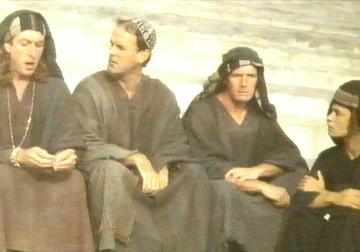
The recent blog war between Kos and The New Republic has exposed a rift in Democratic politics as deep as it is tiresome. I've come away believing neither the Kos charge that TNR is a gay-friendly National Review, nor the TNR charge that Markos is Julius Streicher. Everyone's coming out of this looking pretty silly, while back in the grim world the tortures, the illegal detentions, and the ruinous Iraq policies of the Bush regime go on. I realize that nobody involved in this intra-blog squabble can actually do very much about these problems, but it would be nice if they could at least have some dignity in the face of them.
Then again, as George Constanza so aptly put it: "I lived my whole life in shame! Why should I die with dignity?"
With all the feces flying around, though, it's easy to forget that some good articles come out of TNR. Take this article by Rick Perlstein called "What Is Conservative Culture?" It addresses how the various factions of conservativism--from the vapid "South Park" conservatives to the prudish evangelicals; from the erudite, bespectacled scholars who've memorized Hayek and Friedman to the beer guts with pick'em up trucks who think that Straussianism refers to a fanatical belief in the power of loose fitting denim--hold themselves together by their common love of rebeling against a supposedly hegemonic liberalism (a belief that persists even though conservatives run almost everything worth running). I'd always wondered how these very different people succeed in getting along, and now I know. They hate me.
I'm not sure what it says about the left that we can despise George W. Bush but still have the energy to hate each other too, but four words spring to mind--The People's Front of Judea.
Monday, June 26, 2006
Sunday, June 25, 2006
The Future of Labor Relations
Felt a moment's despair over Majikthise's post on the Labor Department's collaborating with corporate lobbyists to shut down card check organizing of unions. During that moment, I saw a vision of the future, and it looked a lot like this:
From Blackadder the Third:
Edmund: (returns with Buxomly, who staggers) Your Highness: Sir Talbot Buxomly, MP.
Prince George: Ah, Buxomly! Roaringly splendid to have you here. How are you, sir?
Sir Talbot Buxomly: (Heartily?) Well, Your Highness. I dined hugely off of servants before I come into town.
Prince George: Um, you eat your servants?
Sir Talbot Buxomly: No, sir -- I eat *off* them. Why should I spend good money on tables when I have men standing idle?
Friday, June 23, 2006
That Old Move
Mike McGavick, our local Senate candidate, just came out to say that an ad from The Free Enterprise fund goes too far: (Fome the Seattle Times)
Mike McGavick, the Republican candidate challenging Sen. Maria Cantwell, says a television commercial that shows Cantwell's head superimposed on a vulture's body should be taken off the air.
But the Free Enterprise Fund, the pro-business lobbying organization running the ad that advocates repeal of the federal estate tax, says it's not pulling the plug.
"This isn't the kind of ad that I think is helpful to the political process, and I wish it would be taken down," McGavick said in an interview Thursday.
He called the commercial an "inappropriate and personal attack."
"I have said over and over that my campaign will be a civil one that does not attack Senator Cantwell personally," McGavick said in a written statement.
Yeah, sure. This is an oldie but a goodie in the GOP playbook. Get some "independant" organziation to run a untrue/racist/over-the-top attack on a Democrat, wait for it to do damage, then meekly call for its withdrawl. I first remember it from the Bush/Dukakis race, when Americans for Bush ran the Willie Horton ad. It's most recent variation was the Swift Boat Veterans For Truth in 2004. It's a sweet political move. It allows the GOP candidate to slime his opponent, then come out and say "See what my divisive opponent inspires in political discourse? How coarse and rude! Vote for me to return decency and civility to politics." You wouldn't think it would work every time, but it does.
Note to Cantwell: this is just the warm-up. The really nasty variations on this move won't come until Labor Day.
Thirteen for Fourteen
Like Matt Yglesias, I know my Hitler well. I've read about as much of Mein Kampf as a sane man could bear. (Hitler was not just a moral sewer; he was a lousy writer.) I've also read or seen a large sample of his speeches and other documents, and even perused, with great interest, the psychological profile of Hitler the OSS put together in the forties.
So I actually found it pretty easy to distinguish Ann Coulter from Adolf Hitler. (Take the quiz before you read on.) For one, A.H. seldom referred to Democrats in the sense of the U.S. Democratic Party. To him the word "Democrat" would have meant either someone who believes in democracy as a form of government, or a Social Democrat, the major left wing party in Germany; Hitler hated both. (As Yglesias points out, there's also a semantic difference between Coulter and Hitler in the meaning of "bourgeois")
For another, repellent as Ann Coulter is, her prose style is considerably sharper and more succinct than Hitler's. Hitler, who dictated most of his prose work to a secretary, favored long, rambling sentences and lists. Consider the original title of Mein Kampf. It was, in English, "Four and a Half Years of Struggle Against Lies, Stupidity, and Cowardice." (Hitler's editors were able to talk him out of that title, but they could only do so much with the rest of the book.) Coulter, as Ygelsias points out, works in the sound bite era of cable TV, and her prose fits it. The only way the quiz was able to make her quotes look as long as Hitler's was to use a lot of elipses.
So yeah, Ann Coulter's a noxious creature, but I can tell her apart from Hitler. Who she'll brag to about that, I don't want to know.
Wednesday, June 21, 2006
A Wish
Among the habits I'm less than proud of is my penchant for playing James Bond video games. I didn't get to play Goldeneye, which I understand to be a classic, but I've had loads of fun with Nightfire, Brosnan's Everything Or Nothing, and with Connery's From Russia With Love.
My one complaint about FRWL is that the film doesn't really make the best video game material. It's a taut story with lots of wonderful characters, but aside from the group battle at the gypsy camp, there aren't a lot of moments that seem ripe for videogame adaptation. The video game elements seemed tacked on, imported as they were from other Bond pictures (the Aston Martin from Goldfinger, the jetpack from Thunderball). The classic scenes on the Orient Express take place in cut scenes, depriving the player the opportunity to fight Red Grant as Bond did in the film. If they wanted to do a Connery film as a videogame, You Only Live Twice might have been a better choice.
Still, that is not my wish. What I'd kill to see EA do is release a videogame version of The Spy Who Loved Me. Now there's a Bond film with lots of gaming potential. Ski chases, car chases, submarine chases, a battle on a Supertanker, the fight with Jaws at Atlantis. It would be the ultimate 007 game, and I'm sure they could coax Sir Roger into doing the voice part.
Friday, June 16, 2006
I Think You Hear Me Knocking
I've been checking out a couple of takes on the Supreme Court's Hudson ruling. (The one that allows cops to keep any evidence they get when they barge into your home unannounced.) Because I'm almost finished writing my second novel, I don't have time to get into why I think Publius is wrong. Fortunately, Majikthise does it for me.
Pretty Lame Ad
I first read about Lieberman's ad on Talking Points Memo. I've also got to wonder what's on his campaign manager's mind. Lieberman beat Lowell Weicker for the Senate 18 years ago. Younger Democratic primary voters are probably too young to remember much about Weicker, or the issues that animated that particular race; and for older ones the memories of the Lieberman/Weicker race are less present in their minds than is the war in Iraq or the Liberman/Bush televised kiss.
Now it's possible that Lieberman knows his territory better than I do, and that Lowell Weicker remains some sort of bogeyman in the minds of Connecticut Democrats; but I don't see that. Indeed, though I'm sometimes wary of Wikipedia's information, their article on Weicker does fit with what I remember reading about the man in the old days. If anyone would see him as an ogre whose influence in Connectitcut politics should be eliminated, it would be hardcore anti-tax conservatives. Unfortunately for Lieberman, few of them vote in the Democratic primary.
Besides, just how firm is the connection between Weicker and Lamont? Yes, Weicker endorsed Lamont against Lieberman, but Weicker also endorsed Howard Dean against Lieberman. Does that mean that Howard Dean is also one of Weicker's bear cubs? Weicker also endorsed Bill Bradley over Al Gore in 2000. What does that suggest about Bill Bradley's connection to Lowell Weicker? Certainly Ned Lamont and Lowell Weicker share a distate for Joe Lieberman, but that doesn't imply mentorship.
In the end, what's more likely, that two left-leaning politicians of different generations happen to share a dislike for a more conservative incumbent; or that Lowell Weicker has been secretly grooming Ned Lamont for years, all the while nursing his hatred and plotting his revenge against the White Whale Lieberman, until finally Weicker decided the time was ripe and struck?
Lieberman probably believes the latter. Then again, Lieberman believes a lot of weird things politically, which is why he's in trouble now.
I can use the same sort of rhetorical tactic Lieberman uses in his commercial against Lieberman, by the by. Once upon a time, the National Review endorsed Joe Lieberman, and this year so did Sean Hannity and Bill O'Reilly. Does that mean that Lieberman belongs to William F. Buckley and the No Spin Zone? Well...possibly yes. Certainly, Lieberman's behavior gives us Democrats reason to wonder. But instead let's give him the benefit of the doubt: though Lieberman and Sean Hannity share a disdain for Ned Lamont in particular and liberals in general, one is not necessarily the mentor of the other. In that sense, Lieberman and Lamont are in the same boat.
Well, not quite. I don't think Democratic primary voters hate Lowell Weicker nearly as much as they hate Sean Hannity (though again, maybe Joe Lieberman knows them better than I do). And in this race, it's Democratic primary voters who count. It seems to me that this ad, far from hurting Ned Lamont, actually raises a lot of questions about Joe Lieberman that he'd rather not have out there. Does Lieberman really think (or expect voters to believe) this is all a Lowell Weicker plot? Does Lieberman actually want to get into a conversation about who endorsed whom? Does Lieberman really think that condescending to, and insulting the intelligence of, Democratic primary voters is a good strategy in a Democratic primary?
Tuesday, June 13, 2006
Just When You Think All Hope Is Lost
Weird Al gives us a necessary song parody for free. True, all hope is still lost, but at least it's a funnier ride through the abyss.
Monday, June 12, 2006
Roethlisberger Hurt
Big Ben, riding his motorcycle without a helmet, crashed and flew into the windshield of a car. I'm not a huge Steeler fan, as such, but I hate to see a player as exciting as Roethlisberger ruin himself and his team by taking stupid chances. Dude, isn't the prospect of having Jevon Kearse or Ray Lewis flatten you risk enough? Ben, if you recover, ditch the bike, buy a Mercedes, and save the Easy Rider fantasy for your retirement years.
Republican Admits that Society Causes Crime
Or, at least, his crime. From Political Wire:
Allen Raymond, the Republican strategist convicted in the New Hampshire phone-jamming scheme, told the Boston Globe that while he's responsible for the crimes that landed him in jail, he also blames "a Republican political culture that emphasizes hardball tactics and polarizing voters."
"In his first interview about the case, Raymond said he doesn't know anything that would suggest the White House was involved in the plan to tie up Democrats' phone lines and thereby block their get-out-the-vote effort. But he said the scheme reflects a broader culture in the Republican Party that is focused on dividing voters to win primaries and general elections. He said examples range from some recent efforts to use border-security concerns to foster anger toward immigrants to his own role arranging phone calls designed to polarize primary voters over abortion in a 2002 New Jersey Senate race."
Said Raymond: "A lot of people look at politics and see it as the guy who wins is the guy who unifies the most people. I would disagree. I would say the candidate who wins is the candidate who polarizes the right bloc of voters."
Pity these attacks of conscience don't take place before elections, or before convictions in court. Oh, well. It's worth a chuckle anyway.
Sunday, June 11, 2006
While I'm Reviewing
Neil and I caught the first preview of ACTs production of Wine in the Wilderness Friday night. It's a great show, and though I didn't have to pay to get in, those of you who have to should, so that you can to treat yourself to two of the finest performances I've seen in Seattle theater in a long time: April Yvette Thompson as Tommy and William Hall, Jr. as Oldtimer.
So if you're in the city, take advantage of it.
An Inconvenient Truth
This is a compelling look at what carbon dioxide levels in the atmosphere are doing to our planet, as well as a revealing look at how much fun Al Gore can be. The scariest information comes in the description of how quickly, and catastrophically, ice fields like the land ice in Greenland and Antarctica can melt. The best news it delivers is that we have the technology to get out of trouble, if only we take the trouble to deploy it.
See it. Live it. Love it. Be it.
Thursday, June 08, 2006
Professionally Foul
I haven't had a lot of time to actually view Ann Coulter during her book tour, but it seems like a lot of people wonder why TV programs like The Today Show or Whatever the Hell Tucker Carlson's Show Is Called put her on. Actually, there's not much to get there. Ann Coulter is a woman who makes her living by calculating just how horrible her colleagues have been, then taking it one step further. She's a right wing carnival geek act who hopes to appall her audience with the sight of her own degraded filthiness. Right wingers watch her because they sometimes love to view the nether regions of their own souls. Those leftists who do pay attention to her do so, I guess, because she's a distillation of everything the left finds repugnant in the right. And if you're willing to be an object of disgust, revulsion, and a certain kind of morbid curiosity, cable TV news has a camera waiting for you.
Actually, there have been times that I've watched more than a few seconds of Ann Coulter. (Yes, some of those times involved losing the remote, but stick with me here.) What I wait for on those occasions is the moment when she takes off the blonde wig and reveals that she is in fact Andy Kaufman, and that Coulter's entire act has been Kaufman's twenty year metajoke on news organizations, Regnery publishing, Andy Kaufman fans, and the world at large. I'll bet that's why Bill Maher brings Coulter on his show. If Andy Kaufman is going to step out of his Ann Coulter disguise, it's going to happen on Maher's set. You can come out now, Andy. We're wise to you.
Saturday, June 03, 2006
Once More, Tugging A Tired Thread
The DLC has a column up accusing Democrats who support Ned Lamont over Joe Lieberman of "liberal fundamentalism" or, in their words "an intolerance toward dissent and diversity that can repel voters and make an enduring Democratic majority more difficult to achieve." The article goes on to argue that what "the left" is doing in opposing Joe Lieberman amounts to a purge of dissenting voices from the party:
The Democratic Party today is far more unified in its basic values and policy positions than it was two decades ago, and also urgently needs to expand its electoral and geographical base. There's less of an excuse than ever to indulge in liberal fundamentalism, litmus tests, intimidation of dissenters, and purges, and much more to lose from shrinking the party's big tent.
But that's exactly what the national movement to purge Joe Lieberman represents. Comparing him to apostates like Zell Miller is crazy. As Senate Democratic Leader Harry Reid points out in a recent letter endorsing him, the most recent independent analysis of Lieberman's voting record shows him in solidarity with Democrats 90 percent of the time, about the same as Reid's own record. He's a recognized leader among progressives on issues ranging from the environment and labor to taxation and fiscal policy. He was a loyal partner of Al Gore's in the bitter 2000 presidential election, less than six years ago.
Some Lieberman foes, dubbing him "Holy Joe," are angry at him for championing the expression of religious faith in the public square, and for standing up against corporate-sponsored trash culture on behalf of families struggling to control their kids' values and upbringing. But his main sin appears to be his staunch and very consistent belief that the war in Iraq was and is right, even if that means occasional agreement with a Bush administration that he criticizes on almost every other issue.
Okay. I wasn't aware that primary voters in Connecticut, opposing one Senate candidate, constituted a purge. If the left were really trying to purge moderate-to-conservative Democrats who don't support their agenda, you'd think the knives would be out for Kent Conrad of North Dakota or Ben Nelson of Nebraska. (An attempt to run to the left of those guys in their states would be suicidal, but since the column already calls Lamont supporters crazy...) Hillary Clinton looks like she'll cruise to re-election in New York, a fairly liberal state from what I hear, despite her support for the Iraq venture. And though John Edwards now expresses regret for his vote for the Iraq war, he wasn't doing that when he ran for President in 2004, and primary voters supported him fairly deep into the season. The only other candidate who might arguably be in trouble because of her Iraq war vote is Maria Cantwell, but her problem in her own party is much less severe than Lieberman's. You'd also think that lots of Democratic House candidates who voted for the war would be getting it in the neck, but I haven't heard anything serious there either.
Besides, is the comparison of Joe Lieberman to Zell Miller all that crazy? Voting records notwithstanding, both guys are best known for going to the political chat shows and trashing Democrats for being too mean to the Bush administration. (I covered this in an earlier post.) Joe Lieberman may vote with the Democrats a lot, but he goes out of his way to be seen as cozy with Republicans. The DLC's shock that this behavior irritates Democrats around the country demonstrates that the DLC is dangerously out of touch.
Joe Lieberman's problem with the party stems from a failure to recognize that his adopted persona of a moderate maverick who likes to reach across the aisle is not one with which many Democrats, tired of watching their party bend to the Republicans on issue after issue, can feel comfortable. After six years of Bush, Lieberman's act has long since passed its sell-by date. Now I know Lieberman's response is that he votes with the Democrats 90% of the time, that he's not really with the Republicans as often as he appears, and that he has much more sympathy with liberal causes than he demonstrates. But, as Kurt Vonnegut so aptly put it in Mother Night "We are what we pretend to be, so we must be careful about what we pretend to be."
Witness Howard Dean, whom the DLC column lumps in with these renegade leftists. For Howard Dean's entire tenure as Vermont governor he was fiscally conservative and socially moderate. But the vehemence of his opposition to the Iraq war and his freewheeling public persona transmogrified him into Eugene Debs among both his supporters and his critics. Is he really a leftist, as the DLC claims? Is Joe Lieberman really Zell Miller? Is Howard W. Campbell Jr. really a Nazi? Does it matter? Consider this quote from Mother Night, where Campbell visits his father-in-law one last time and receives the most devastating compliment from him:
"Did you know," he [Werner Noth] said, "that until almost this very moment nothing would have delighted me more than to prove you were a spy, to see you shot?"
"No," I said.
"And do you know why I don't care now if you were a spy or not?" he said. "You could tell me now that you were a spy, and we would go on talking calmly, just as we're talking now. I would let you wander off to wherever spies go when a war is over. You know why?" he said.
"No," I said.
"Because you could never have served the enemy as well as you served us," he said. " I realized that almost all the ideas that I hold now, that make me unashamed of anything I may have felt or done as a Nazi, came not from Hitler, not from Goebbles, not from Himmler--but from you." He took my hand. "You alone kept me from concluding that Germany had gone insane."
Right now, Joe Lieberman serves the Republican party better than he serves us, which makes the question of whether he's really a liberal or a moderate or a conservative shill irrelevant. Lieberman gives the Republicans bipartisan cover, and he makes it harder for everyone in the Democratic party to make the case the the Republicans under Bush have gone off the deep end. Over the last few years he's gone on FOX News repeatedly to lend his name and his moral legitimacy (such as it is) to some despicable ideas. Given that, I'd say that the response of the so-called "angry left" has been altogether measured and proportionate. If only the DLC could make the same boast in its columns.
Tuesday, May 30, 2006
Caution: Planet At Work
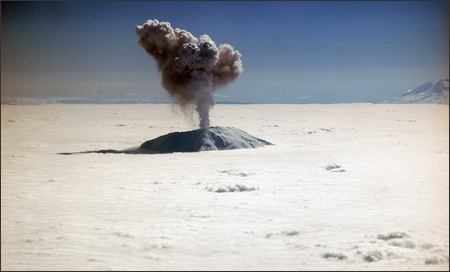
A really cool picture of Mount Saint Helens from a passing plane. (from the Seattle P-I).
Friday, May 26, 2006
Cheers to Canadian Reporters
Apparently Canadian political reporters are already sick of Stephen Harper's bullying, Bush-like tactics. From the L.A. Times:
Since Harper's minority government took office after the Jan. 23 elections, his relations with the national media have become more and more strained. Determined to impose order on the traditionally chaotic press scrum in which reporters shout out questions, Harper said he would choose questioners from a pre-screened list.
The parliamentary media corps, which includes broadcast and print reporters from all over the country, worried that the new protocol would freeze out journalists perceived to be tough on the prime minister. After journalists refused to sign on to the list, Harper refused to take any questions.
On Tuesday, when Harper's press secretary announced there would be no questions after his announcement of aid to the Darfur region of Sudan, nearly two dozen reporters walked out, leaving the prime minister to make his statement in front of a single camera in a nearly empty room.
"We are responsible for asking questions, and he is responsible for answering them," said Yves Malo, the president of the Parliament's press gallery.
Nice.
Wednesday, May 24, 2006
Don't Make McCain Come Back There
Courtesy of Brendan Nyhan, here's John McCain's "fresh, daring, original!" (Kevin Thomas, Los Angeles Times) answer to our problems in Iraq:
"One of the things I would do if I were President would be to sit the Shiites and the Sunnis down and say, 'Stop the bullshit,'" said Mr. McCain, according to Shirley Cloyes DioGuardi, an invitee, and two other guests.
The first obvious question is, "Was he sober when he said this?" I'll take it that the answer to that question is yes until someone proves otherwise. The second question, sadder than the first is, "Has McCain reached the conclusion that the press train following him is so in the tank that he can get away with saying anything?" The third question is whether McCain is so glib and shallow that he takes the nonsense he sprays from his face seriously.
These three questions have been asked about a politician before (Hint: he's the twit with the smirk and the 30% job approval rating), and they lead me to a fourth question. Have we as a nation become locked in some horrible sisyphean matrix of eternal recurrance? Will we push Bush out of our lives only to turn around and find McCain? Will we still be sitting here ten years from now, listening to pundits tell us about how we've reached a turning point on [Iraq/the economy/energy/"American Idol"] and how we'll know in six months whether [the insurgents/interest rates/oil prices/Ryan Seacrest] will rise or fall.
To quote either Tom Servo or Crow, "What is it about the gates of hell that compels people to walk through them?"
Tuesday, May 23, 2006
Suharto Suffers Internal Bleeding
Considering how much internal bleeding he caused in Indonesia, I'll save my pity.
Monday, May 22, 2006
McGavick: His Elbow Is Firmly On the Pulse of the World
Mike McGavick, the Republican senate candidate from these parts, wants to bar Iran from the World Cup unless they give up their nuclear ambitions.
Yeah, that'll quell the Islamic Republic's ambitions of building a bomb to deter U.S. and Isreali military action against them. And if they don't get the message that way, we'll take away Iran's UN ambassador's pool privileges. With foreign policy thinking like this, why do we have a nuclear proliferation problem at all?
If McGavick existed, I'd laugh at him.
Bush On Iraq Today
If we don't flail around uselessly, wasting money and lives in a futile struggle against centuries of deep seated religious animosity, terrorists who had nothing to do with Iraq in the first place will win.
I wonder if anyone bothered to catalog all of Bush's turning point assertions, as was done for Tom Friedman.
Wednesday, May 17, 2006
In News From the Lord
Pat Roberston apparently got a fax from the Deity indicating that I'm dead. My question: could God not provide a date, or is Robertson not telling us because he wants us to suffer the wrath with the drowning and the burbling and the little shrimps going up my nose?
I'll make a note to be scared.
Monday, May 15, 2006
While I'm On the Subject
While I'm on the subject of portentous bunk, I checked out the trailer for the remake of The Omen. I wonder if people working on all these horror remakes (going all the way back to the remake of Psycho) understand what it means to try too hard. Horror and humor are pretty closely related in structure (in one the payoff is a scream; in the other, a laugh). These remakes, as well as a lot of contemporary horror pictures, are like someone who repeats a well-loved joke and then spends the next ten minutes elbowing you in the ribs going "Get it? Get it?"
It's especially dangerous for a film like The Omen to go over the top. The story is at bottom an Idiot Plot. There would be no story if the antagonist (Spoiler alert for people who live in caves or haven't seen the movie poster: the antagonist is the Devil) weren't a total idiot. The Devil doesn't make sensible moves given his goal of keeping Damien Thorn's identity a secret. He lets key figures in his conspiracy continue breathing long enough to spill their guts, and then kills them in ways guaranteed to maximize exposure instead of minimizing it. Even at the end, instead of killing Robert Thorn with an easily arranged plane crash, the Devil has to wait until R.T. has dragged the devil's sprog to a church so that the cops can shoot him, thus fulfilling the poorly known prophecy found in the appendix to the gnostic apocrypha, "And so it shall come to pass, that Thorn the Elder shall take his son unto an unlocked church to pierce him with many piercings. And yea, verily at that time, the constabularies shall follow after him, aiming their guns and gnashing their teeth. And it shall come to pass that they shall warn him with many warnings to lay down his gun so they can quietly hush this up anon, yet Thorn the Elder, well versed in the rules of diplomatic immunity, does prepare to slay the Child Beast but is himself slain anon by many bullets. And there shall be much paperwork and covering up."
That's a direct quote.
Getting back to my original point, and I did have one, The Omen is an idiot plot, and much depends on the audience failing to notice this. Consequently, the filmmaker must get the viewer to identify strongly with the Thorns and their problem--"What would you do if you discovered that your little boy might be the Beast of the Apocalypse?" But it's hard for viewers to identify with characters when the movie keeps pulling the audience to one side and telling them "See how scary this is? See how weird all this is? Isn't that little boy freaky looking? Check out all that CGI slow-motion breaking glass! That just screams scary, doesn't it?" How can the audience reach fear, or forget the flaws in the plot, when the movie keeps reminding them that what they're watching is only a movie? Richard Donner, who directed the original film, understood this, and he worked hard to maintain a feeling of verisimilitude. The makers of the new film, based on the trailer, don't seem to get it. Not that I'll shed a tear. I root for remakes to fail. If enough of them eat it, maybe producers will spend some bucks on something new (preferably by me).
I Can't Wait Until the Da Vinci Code Opens!
Because that will bring me one day closer to its closing. Now that this weak compilation of text-based computer game plots has elbowed its way into the national dialog, I'm now certain I can feel us all getting lamer.
Could the fans of The Da Vinci Code and the fans of the Left Behind books please sit the fuck down and shut the fuck up? Neither of your books is credible! Their plots are silly. Their popularity, and the respect their popularity accords them is further evidence that humanity needs to evolve a better organ for distinguishing shit from shinola. The arguments between you are pointless and they're giving me a fucking headache. You people are worse than trekkies! Yes, trekkies engage in brainless fights over Kirk vs. Picard, but they don't take the fight to "Nightline". The things you're squabbling over don't matter to life as we know it on this planet. You people aren't news. Stop pretending that you are!
Sorry I went off there, gang. It's just that seeing the umpteenth "Da Vinci Code" book-and-soundtrack TV ad (the most impressive story of this era my ass) put me off my feed. There are good books out there, people. Pass the display stands for these bound and wrapped bundles of offal, find these good books, and read them. There are genuine mysteries in the universe--is there life under the ice sheet of Europa, will we be able to employ negative energy to travel faster than light or backward in time one day? Once you start fiddling with these, tales of what Jesus did with whom after he died and what hokey secret code leads to which imaginary relic start to look small and sad and silly.
Things You Can Do With Phone Records
From Josh Marshall:
Isn't this the other shoe dropping?
The piece is written in a roundabout sort of way. But if I understand it, Brian Ross is reporting at ABC news that the US government is tracking the calling patterns of political reporters to further their leak investigations.
If that's true, then I think we can set aside any pretense that administration policy on all manner of electronic surveillance isn't being brought to bear on political opponents, media critics, the press, everybody.
I need a drink.
Monday, May 08, 2006
Holy Joe and the Bloggers of Doom
Majikthise, Atrios, Bullmoose, Kos, and Drum are in a war over Jon Chait's column. The column recommends that the Democrats in Connecticut vote for Lieberman even though he's a terrible senator with whom most of them disagree. Apparently Chait feels this is a way to beat back the angry lefties in the world of blogs who want Holy Joe to sleep with the fishes and to drag the party back to 1972. Not that anyone's asking me, but I don't see how one has anything to do with the other.
What's sinking Joe Lieberman among Democrats isn't his voting record (which looks pretty good, though it seems so out of sync with his public image that I wonder whether the people keeping the tally included votes that don't really mean anything--like voting for a law raising the minimum wage but refusing to vote to end the filibuster on it), or even his bucking the party on the Iraq War (as such). It's that every time the Dems summon up some momentum against a President that pretty much every Democrat, leftist or centrist, dislikes, Lieberman throws himself between the Dems and the President and scolds the Dems for being so mean. It's very deflating to see Lieberman defend Bush on Abu Ghraib, or imply that dissent against the war in Iraq helps the terrorists because it brings down "the only President we've got." It's almost as deflating as Lieberman's chumming it up with Dick Cheney during the Vice-Presidential debate, or (even worse) kissing Bush on the floor of the House before the State of the Union. He makes nice with the other side so often that a lot of us wonder: shit, Joe, why don't you marry them?
Other centrists don't have Lieberman's problems (at least, not to his degree). Maria Cantwell, one of my senators, is up for re-election this year. She's taking some flak over Iraq, and is almost as unbending on the subject as Lieberman is; but Cantwell will get my vote anyway because she picked fights with Bush and Alaska Senator Ted Stevens over oil tankers and ANWAR, fought dirty, and won. There are some on the left who remain pissed and won't volunteer for Cantwell, but they'll come home by the election. (Fear of Ted Stevens's clone, Mike McGavick, will see to that.) I'm to the left of, well, just about everyone really; but Cantwell's my senator for as long as there isn't a more attractive alternative who can win the general election. I can figure that in a fight she'll mostly belt the Republicans, not her own voters.
What's not at stake in the Lieberman election is the question of taking the party back to 1972. I expect that Kos and Atrios, their ostensible liberalism aside, would back just about any Democrat over Holy Joe. Left, right, or mainstream, any Dem who could restrict himself to a firm, cold handshake when meeting the President would be enough. Any Dem who could keep his face off Fox News for a few consecutive days would be enough. Any Dem whose first instinct isn't to attack other Dems would be enough. Ideology isn't the issue here. Joe Lieberman's continued self-aggrandizement at the expense of his supposed friends is.
Senator Lieberman, maybe this experience will teach you something. The next time you feel an impulse to kiss President Bush, make sure it looks like the kiss that Michael gave Fredo.
Thursday, May 04, 2006
Oh, and Speaking Of Bombing
Donald Rumsfeld, who bombs for a living, demonstrates how not to handle a heckler.
"Did not!" Rummy? Snappy.
Giggles
John Rogers cuts through all the noise surrounding Stephen Colbert's performance at the correspondent's dinner (the first comedian's performance I've seen at the dinner that was actually worth the bother of watching), to explain what made it a good comedy performance:
In various circumstances as a road comic, I have seen every comic you can imagine, at some point or another, suck it. Hard. Seinfeld, Leno, Belzer, Ellen*, Ray Romano, pick 'em. Sometimes you just don't gel with an audience, but at that point you've been doing it long enough not to suddenly think the five years of good shows were somehow flukes.
But I have seen plenty of people "bomb" who left me breathless with the genius of their writing. Larry David, who a fair number of even the conservative culture mavens love, was notorious for his spellbinding nightclub routines that comics standing in the back of the room marvelled at but audiences hated. Garry Shandling famously worked open-mike nights for something like SEVEN YEARS before he was able to meld his brilliant writing with something audiences could relate to.
If Colbert "bombed", it was because the audience didn't like him. And you know what -- they WEREN'T SUPPOSED TO. We have been treated to toothless feel-good comedy for so long, we have forgotten what the court jester's job was: he was the only guy who could mock the King. And, seeing as we now have a President who acts like a King, it's only fitting that Colbert revive the tradition in its truest form. If I remember correctly, the toady court followers were also fair game for the Jester, and we could hardly call the modern media anything less these days, can we?
He also got into the comic mind in a way that sounds true to me:
I hate to play into the stereotype of all comics being angry, but at the very least we are all in some small way sociopathic. We do not process emotions and emotional context like other people. At the same time some civilized part of me was horrified by the first 9/11 joke I heard, some other part of my brain was impressed by its structure and transgressive nature. I'm not particularly pround of that, but it was as reflexive as a musician hearing a song he hates, but instinctively picking out what key it's in.
Me too. Read the whole post.
Tuesday, May 02, 2006
Crazy As A Soup Sandwich
 Just a quick shout-out to Larry Dahlke (on the blogroll, to your right), who happened upon the comic book version of Harlan Ellison's "Crazy As A Soup Sandwich" and sent it to your friend and humble blogger. Well spotted, ol' buddy, and much appreciated.
Sunday, April 30, 2006
Miss Witherspoon
Thanks to some free tickets Seattle Dramatists scored for me, Bitterspice and I saw Christopher Durang's Miss Witherspoon at ACT last night. It was the second preview, so it had a few kinks still. I don't think they're finished tweaking the light cues yet (in the early scenes the lead actress vanished unexpectedly a few times); the wig lines were really obvious; and something about the pace of the final scene seemed rushed. Still, we had a good time (any play that even attempts to juggle the spiritual insights of Christianity, Camus, Hinduism, and Gandalf the Grey(!) has my vote), and it looks like the show will have a successful run. I hope so for ACT's sake. They need the money.
International Workers Day
In honor of both the workers who assembled in Haymarket Square in 1886 and the students who mobilized against their oppressors in Tiananmen Square 103 years later (singing a version of this song as their anthem), I link to Billy Bragg's version of The Internationale
Saturday, April 29, 2006
Curbing My Enthusiasm

And with the first selection of the 2006 NFL Draft, the Oakland Raiders select Michael Huff, DS, Texas.
With Leinart still on the board, this was the way we went. It's hard not to feel underwhelmed. A DB has been our first pick in four of the last five years. We also selected a DB in the second round last year and in the third round the year before. It's becoming, I must say, a bit of a fetish with Oakland, and sadly, it's not one that's paid off handsomely on the field. I was hoping for Leinart not only because he's Leinart and should have a great career--especially if he manages to escape the abyss that is the Arizona Cardinals, but also because it would have meant that the Raiders had kicked what looks more and more like a bad habit.
Let's lay things out. It's helpful to have a talented, athletic secondary. There's no question there. But considering the rule changes and the emphasis on enforcing the illegal contact rules, shutdown corners aren't what they once were. The days of Lester Hayes and Michael Haynes (or Deion Sanders, for that matter) are over. Defensively, it's more important now to get a good rush with your front four and force the opposing QB to make bad decisions. (We ought to know. Teams did it to Kerry Collins for two nightmarish years.) This to some degree explains the popularity of two gap defenses, where speedy linebackers shoot the gap a half second faster than a 4-3 DE would.
Consider the 2002 Oakland Raiders, as I like to do when times are hard. Charles Woodson didn't last long that season, breaking his leg against Pittsburgh in Week 2. Philip Buchanon, the Raiders 1st round pick that year, busted out against the Chargers in Week 5. A lot of people saw disaster looming. Beneath Buchanon and Woodson were, well, some guys. We still had Rod Woodson to keep heads together and Tory James was a solid-but-not-spectacular RCB (both, it should be noted came to us as free agents), but perpetual backup Anthony Dorsett lined up on the strong side for most of the year, and our other corners were practice squad guys like Clarence Love. Did disaster happen?
Well, almost. We lost four consecutive games. But we rebounded in Denver and won nine of our next eleven with a beat up secondary. How? Trace Armstrong, Rod Coleman, John Parella, Sam Adams, Bill Romanowski, and Eric Barton. They shut down the run (3rd overall vs. the run), combined for 43 sacks, kept the passer in danger, and had among them four interceptions (the 2005 Raiders, with all those first-day picks in the secondary, had five). True, the offense scored loads of points (which to some degree kept running backs from getting started), but the Raiders defense was able, in 2002, to keep teams like the Steelers from employing their hand-it-to-Bettis-hold-the-ball-for-ten-minutes tactic. Our ability to stop the run with the front seven allowed the safeties and corners to keep the receivers in front of them and watch the QBs eyes. Rod Woodson in particular feasted because of this, intercepting eight passes that year, including a 98-yarder that started us off against Denver during the Monday night game. We seldom had anything to fear from play action. We could run the ball, we could stop the run, and once we discovered that Rich Gannon really could throw the ball sixty times in a game that was it.
Would we have done even better with a healthy C-wood on the field all year? We might have, but as it turned out he wasn't needed. (Indeed, by trying to come back too soon, he was actually a liability in the playoffs.)
Calling the defensive backs on a team by the collective name of secondary is appropriate, not just because they're behind the front seven, but because in relative importance they are, well, secondary. With this year's 7th overall pick, there were no front-seven players worthy of that high a selection, but there was one offensive player who was: Leinart. And QB trumps DB. Don't believe me? Think of it. We lost two first round corners in 2002 and went to the Super Bowl. How close would we have gotten to the big day if Rich Gannon had broken his leg during that game in Pittsburgh? Perhaps two good follow up questions would be, how high a draft pick would we have gotten in 2003, and would Al Davis have spent it on a DB?
Update 4/30: Thanks for the link Raider Take. Here's hoping you're right and Huff makes an impact, but when you brought up the way Roethlisberger slipped past us two years ago, it hurt me. It really hurt me. That guy is playing excellent football and still has lots room to grow. Oh, the pain! The pain of it all!
Sunday, April 23, 2006
Someone Broke Into My Car
Actually, broke is a little strong. During last week's car repairs, the repairmen opened the back door to vacuum the interior. They didn't lock it afterwards, and I didn't check. Someone else did. They moved a lot of things around looking for, I guess, my iPod or my in-trunk CD player. Little did they know that the iPod stays with me and I don't have an in-trunk CD player. Well, I guess they know now.
Whoever it was didn't do any damage, so far as I can tell. I wish he would have shut the doors. He could have run my car battery down. Come on, thieves, be kind. Some of us have jobs to drive to.
Remember, you can't rip it off if I can't buy it.
Friday, April 21, 2006
Monday, April 17, 2006
Tax Day
Today I said goodbye to flipping great wodges of cash--the price I pay for not having a boss. But, as Martin Sheen's character in Wall Street said, money's only something you need if you don't die tomorrow. With Bush in office, the odds of that happening are fairly good.

Yeesh

Sometimes it bears repeating that the Reverend Moon, who has billions of bucks and more influence on our national discourse than we would like to imagine, is one weird fucking dude.
Friday, April 14, 2006
"The Simpsons" Cures What Ails Me
One of the lessons of Mitch Albom's schmalzy book (and now, schmalzy play is, (drum roll please) "Live every day as if it were your last".
Irritation at the appearance of that old chestnut seized me until I remembered this bit from "The Simpsons" where Homer is going through the steps that will lead him to Successmanship:
Homer: Step One: live every day as if it were your last.
(next scene: Homer sits on the curb, sobbing inconsolably)
Homer: No! I don't want to die! It's not fair! I'm so young! (stops crying, opens book) Step Two...
Ah, Homer Simpson, you've got the cure for the mid-day kitsch-induced blues.
The Phrase Rhymes With Clucking Bell
Had a rougher night than I needed. My windshield wipers conked out on me on the freeway tonight. I was able to limp to an exit, where I spent the next hour waiting for a tow truck. It's a small drag, but a drag nonetheless.
Wednesday, April 12, 2006
From the Land of Wish and Dream
Someday, the Bull Moose really must visit the planet Earth. In a blog post running down the left for their continued partisan hatred of the President (here is the link to Jon Chait's excellent Case For Bush Hatred), the Moose calls upon the President to do the following when it comes to Iran:
For the sake of the country and the ongoing war on terror, the President should form a genuine government of national unity. A thorough house-cleaning should be followed by appointments of Democrats and Independents for important cabinet and sub-cabinet positions. Far more is at stake here than the fates of political parties - the security of the country is in the balance and it demands credible, bi-partisan leadership.
This is a dangerous world and our enemies will not wait until we put our political house in order. A confrontation with Iraq is not inevitable, but petty and irresponsible partisanship will tell the Iranians that they have nothing to fear from the threats from the U.S. The President should engage and involve and inform the Democratic leadership about any plans about the Iranian threat.
Okay, let's see how many impossible things the Bull Moose believed before breakfast this time.
"The President should form a genuine government of national unity."
At no point has George W. Bush ever shown the slightest interest in national unity. Firing up his political base while alienating the center and left has been his method of governance from the beginning, and, as we've discovered, the only ways Bush ever changes his mind are if a billionaire needs a new stone lion for his villa or if Jack and Rexella Van Impe tell him it'll bring him one step closer to fighting the Dark One in the desert. His idea of comprimise is to say, "Okay, I get what I want, and you get to stand next to me and look happy about it." No Democrat with two good eyes and a pulse would trust George W. Bush enough to form a unity government with him. This doesn't exclude Joe Lieberman, of course.
"A thorough house-cleaning should be followed by appointments of Democrats and Independents for important cabinet and sub-cabinet positions."
Not only would no Democrat consent to form a government with Bush, but Bush would never consent to a political house cleaning. The people who would need to be cleaned out to change the direction of our foreign policy--Rumsfeld, Cheney, et. al.--know where all the bodies are buried. Bush can't afford to alienate them. They're too closely hardwired to the GOP power structure. Besides, Democrats and Independents might ask all kinds of inconvenient questions, and we all know what Bush does to people who do that.
"Far more is at stake here than the fates of political parties - the security of the country is in the balance and it demands credible, bi-partisan leadership."
The security of the country is in the balance? Because Iran managed to employ 180 centrifuges to slightly enrich a quantity of uranium far too small to put together even a tiny nuclear weapon? Wake me when they have 10,000 centrifuges and I might make a note to be scared.
In reality, we could help along our national security a lot more if we spent our energies securing Russia's loosely guarded nuclear arsenal, spending money on port inspections, and making sure no one puts a bullet in our friend, Pakistani dictator Pervez Musharraf. Not that Bush is doing all that much about any of these things.
As for credible bi-partisan leadership, please spare me. Some people continue to succumb to the myth that there are magical leaders out there who will transform America from a screaming match to a singalong. George Bush tried that, but, like every other "uniter not divider" in history, his idea of unity is that everyone agrees to do whatever George W. Bush wants. Those who don't hate America, don't take its security seriously, are objectively pro-terrorist, or whatever. That held the public imagination for a while, but the smears seem less potent now that we've lost a few thousand troops and the city of New Orleans.
The history of democracy has been the history of one long angry fight about who can do what to whom and under what circumstances. And I like it that way. When I see a group of MPs in some parliament insulting each other and hurling fists, I know that country is okay. What's scary is when the argument stops. Singalongs are bad, bad things. I'm sure that Russian citizens felt a need to brace themselves when, in 1929, all the votes of the Politburo starting coming out unanimous. (Ah, Stalin, the ultimate in unity government.)
A little something about me. I don't even like to feel united with people I agree with. I may go to the protest march to support a cause, but I won't chant the slogans and I won't hold anyone's hand. I'll even go so far as to make sure I'm walking at my own pace, because I don't do lockstep. I reserve the right to conclude, at any time, that anyone is completely full of shit.
Boxers touch gloves before and after the game as a sign of sportsmanship; but during the game, I want haymakers and blood. Members of congress should be the same.
"This is a dangerous world and our enemies will not wait until we put our political house in order."
Actually, Iran will have to wait until they can actually do something with their uranium. In the meantime, we can expect them to release a lot of scary sounding reports in an attempt to expand their influence. Our best response would be to stay cool. Even in our enfeebled state--thanks, George--we're still tougher and more widely admired than the Iranians. They're the molehill; we're the mountain. The only way we can blow this is if we lose our heads and start doing stupid stuff. Will Bush do something stupid in the next three years? Gee, what are the odds?
"A confrontation with Iraq is not inevitable, but petty and irresponsible partisanship will tell the Iranians that they have nothing to fear from the threats from the U.S."
Actually, the lion's share of our military forces being stuck in Iraq tells the Iranians they have nothing to fear from our threats. The Iranian regime surely knows that our military has recruiting problems. They know that their terrain makes it much harder for U.S. troops to invade Iran than it was to invade Iraq. The Iranians know that they can conceal their facilities from air strikes. And they know that any U.S. attack on Iran would drive the rest of the Muslim world insane and jeaprodize U.S. troops still in Iraq. And don't forget how helpful this little dick fight is to the Iranian regime. It busies giddy Iranian minds with a massive foreign quarrel, and it allows the regime to blame all of Iran's problems on the west generally and on the U.S. in particular. How do they know this? TV.
"The President should engage and involve and inform the Democratic leadership about any plans about the Iranian threat."
And when he does, magic pixies will crawl out of my butt.
Monday, April 10, 2006
The Italian Election is frighteningly close but...
...at least it gives me a chance to learn the names of the people involved in Italian politics and what all their abbreviations mean. For the first time my reading of Italian news isn't confined to the entertainment section--which used to be the only place where I knew most of the names and could figure out the meanings of words from context.
Prodi has declared victory. I can only hope he's right and my prediction was wrong.
Update: Interetingly, the legislation Berlusconi passed to help the right wing parties in future elections appears to have backfired. Next time, he might want to consult Tom Delay on rigging elections and gerrymandering districts. I hear the bugman's looking for work.
Friday, April 07, 2006
The Leaker
We now know that the leaker who disclosed that Valarie Plame was a CIA agent was the President of the United States. What's next? George W. Bush will, in a prime time news conference, promise to find out who the President of the United States is and punish him to the fullest extent of the law.
Wednesday, April 05, 2006
Another Eager Slave
Let's see. Ted Stevens let Mike McGavick take credit for his withdrawl of a bill allowing huge oil tankers into Puget Sound, even though McGavick had little to do with it. He's now raising bags of money for him. What, I wonder, will the old bridge-to-nowhere sod get for his pains? Washington voters might want to ask.
Sunday, April 02, 2006
The Worst Sequels 3: The Dregs of the Dregs
At last this exegesis on bad movies reaches its climax, and, as is usually the case when you've reached the third installment of a series, the worst is yet to come. You can read the previous entries here and here.
So here are the final four:
4. Outlaw of Gor: Jack Palance has frequently crapped bigger than this movie, which tells the story of Tarl Cabot. Cabot has a special power. By his very presence he can induce others to compulsively repeat his name. (Imdb reports that the name Cabot is invoked fifty-five times in the movie's first ten minutes.) Palance plays the high priest Xenos, who poisons geriatrics on behalf of the evil Queen Lara and whose hats are taller and more fashion-forward than those of the Pope. Anyway, Cabot gets caught up in Lara and Xenos's machinations to gain power over this papier-mache empire, and Cabot's forced to wander the desert in a leather thong with his trusty midget friend by his side. Many hinders, buffalo shots, and oiled-up catfights ensue. This film features Watney Smith, the second most grating character in film history.
3. Damien: Omen II: Actually, I should move this one back before both Amityville II and The Exorcist II, but that would involve editing. There is one ground on which I can defend its placement here. This is a sequel that's not only bad on its merits, but it also raises questions that end up spoiling its predecessor. By contrast The Exorcist escaped unscathed and the reputation of The Amityville Horror stands where it always stood. But the plot of Damien: Omen II can be summed up in the form of shampoo instructions: 1) Victim learns Damien is the antichrist 2) Victim tells someone (and enhances credibility by acting like a raving nutjob) 3) Victim gets killed in a bizarre fashion 4) Repeat. I have a huge question for this movie. If Damien's identity as the antichrist is supposed to be this big-ass secret, why are there so many clues lying around for people to find? In this movie, there's this wall supposedly painted in the 13th century that depicts the antichrist at four ages. (People didn't paint in photo-realistic styles in the 13th century, but never mind.) If Satan can sucessfully arrange the deaths of all these people, isn't it within his diabolical power to deface an inconvenient mural? And why is it always necessary for Satan to wait until after people have spread the word about his evil sprog before he kills the poor fools? If Satan knows what they know, why not simply bump them off from the start? Eventually, you start wondering why certain people got an opportunity to spill their guts before they-um-spilled their guts in the first movie as well. It's sad.
2. Batman and Robin: Throw any three random "Batman" comics in a blender and you'll come up with a better story than this one--a mess in which Mr. Freeze, Poison Ivy, Bane, and Dr. Joyce Brothers plan to freeze people, poison them, and, oh, who cares? The good news is that George Clooney's career recovered from this. I guess that mask really can be an asset.
1. Superman IV: The Quest for Peace: I said Watley Smith was the second most grating character in movies. The holder of the title is here, in the body of Jon Cryer. His Lenny combines the annoying chattiness of Watley Smith with the superfluity of Jar Jar Binks to create a storm of itchiness unmatched in human experience. And he's not the only bad thing in the movie. Part of the film is occupied with a hostile corporate takeover of The Daily Planet. There's no reason to care about this, because most of action takes place off-stage and Superman can do nothing about it (and if he could, would we really want to watch Superman filing injunctions and arranging poison pills), but it keeps popping up in the movie, insisting on its share of the attention. The nuclear disarmament story, which starts with a letter from a cute child (not the slightest bit maniuplative), seems like a remarkably unilateral decision for an alien to make. Wouldn't the nations of the world start placing their supplies of kryptonite around key nuclear facilities? While I can see Superman speaking out on the subject or exercising moral leadership, I can't figure him putting all the world's nuclear weapons in a big bag and throwing them at the sun. What seems even less likely is that Lex Luthor would take the opportunity to create a dimwitted Superman clone (who, curiously, did not turn out to be Bizarro) as part of a scheme to re-arm the world. (Unless Superman got rid of all the world's uranium and tritium, the world could re-arm on its own, but, well, never mind.) As clones often do, this one rebels against his master and fights Superman in front of unconvincing rear-projection images. Eventually, Superman defeats Nuclear Man by locking him in an elevator (perhaps the least interesting means of victory ever conceived in a comic book franchise.) The movie hurts, hurts, hurts. I hate every frame of it. I hate, hate, hate, hate it.
I'm glad I got all that off my chest. I feel better. I feel...like...saying...Cabot, hey Cabot, what's going on Cabot? Cabot, speak to me. Cabot. Cabot. Why aren't you saying anything Cabot? Cabot. Cabot
Saturday, April 01, 2006
V and Totalitarianism
In reading the discussion of the movie V for Vendetta I found a thread in the argument over its merits, or lack thereof, that I wanted to linger over for a moment. Those who disliked the film maintain that it paints an inaccurate portrait of totalitarian societies. They claim that such societies are animated less by the personalities at the top than by the behavior of the bureaucracies underneath. A sample from The American Prospect
Naturally, his [V's] society’s sickness emerges from a single source -- the film unravels to reveal a sleek and tidy conspiracy. This is gratifying but also deeply off as a portrait of totalitarian societies, which are more often characterized by their interlocking weird bureaucracies, half-truths, and quixotic and opaque decision-making processes than a coherent plan created by one cabal of evildoers.
While it is true that totalitarian states tend to build large bureaucracies to carry out policy, and that these bureaucracies try to develop policies that please their political masters, it seems to me that the character of these regimes, and their worst crimes reflect more the interests of those at the top than those of the mid-level apparatus. The bureaucracy in Stalinist Russia, for example, did not simply run on its own, crushing Kulaks and conducting midnight arrests and political murders; it did those things because Stalin wished those things done. The population lived in fear of the bureaucracy, but the bureaucracy lived in fear of Stalin, Beria, and the secret police. According to Robert Service's biography of Stalin, survival in the bureaucracy, or in the Communist Party, required a close network of friends who could keep you safe, and the skill of knowing when and how to disassociate yourself from that network if it seemed likely that Stalin's ax would fall on it (which it sometimes did for no other reason than to demonstrate Stalin's power). The whole point of Stalinism was to destroy all competing centers of power in the country (the Communist Party included) and to assure that the only one left, the bureaucracy, was firmly in the control of Stalin.
Indeed, sometimes the regime slips right past the bureaucracy in its attempt to reconstruct society. The Cultural Revolution was not, primarily, conducted by bureaucrats. The bureaucrats were among those pushing Mao to the sidelines of power (after the catastrophic failures of the Great Leap Forward). Mao by-passed them with an appeal to the Red Guards to attack intellectuals, teachers, artists, and educated types generally (including any bureaucrats, military, or civllian law enforcement officials who stood against him). This was the Cultural Revolution, orchestrated by a cabal of vicious people who had a more or less coherent plan. Mao may not have orchestrated every action of every Red Guard organization, but without Mao's direction, the Red Guards would never have done what they did.
Now I should say that totalitarian societies that survive these sorts of upheavals with their institutions intact do tend to become a kind of dictatorship of the bureaucracy, if for no other reason than large numbers of politically active people outside bureaucratic institutions have been either killed or reduced to a state where it's unfair to expect much political bravery from them. The leadership of such nations, who were often either victims or potential victims of the previous dictator, usually try to dismantle the personality cults that enabled their predecessor to rule by fiat and restore their nation to a healthier state (without, of course, legalizing opposition political parties which might someday prove threatening to their own power and the stability of the regime). This, however, is a development that takes a long time (autocrats are amazingly long lived figures, for the most part), and the transition can be very hard to make. Deng Xiopeng navigated his way through China's transition. Khrushchev, after Stalin's death, wasn't as lucky with Russia's.
If V for Vendetta has a failing, it is not in its depiction of what looked like a very young, personality-cult-centered totalitarian regime. It was that the movie fails to acknowledge that such regimes, violent and cruel as they are, do represent the feelings of a sizeable percentage of their populations. They depend on the willingness, even eagerness, of people to turn in their neighbors and surrender their freedoms for a sense of security. Such people usually share their leaders' hatred of whatever groups are meant to be oppressed, and they generally see their victims' ruin as a means of bringing them closer to happiness. When I saw all those demonstrators in V masks who'd come to watch Parliament explode, I wondered where the counter-demonstrators were. We like to think that when a regime's lies are exposed that everyone will simply turn against it out of reflex. It's a lovely fantasy, and I thank the Wachowski brothers for making me believe it; but ultimately they underestimate the ability of people to rationalize the behavior of those they prefer to support.


